Repair or Replace Your Garage Door Opener? How to Decide
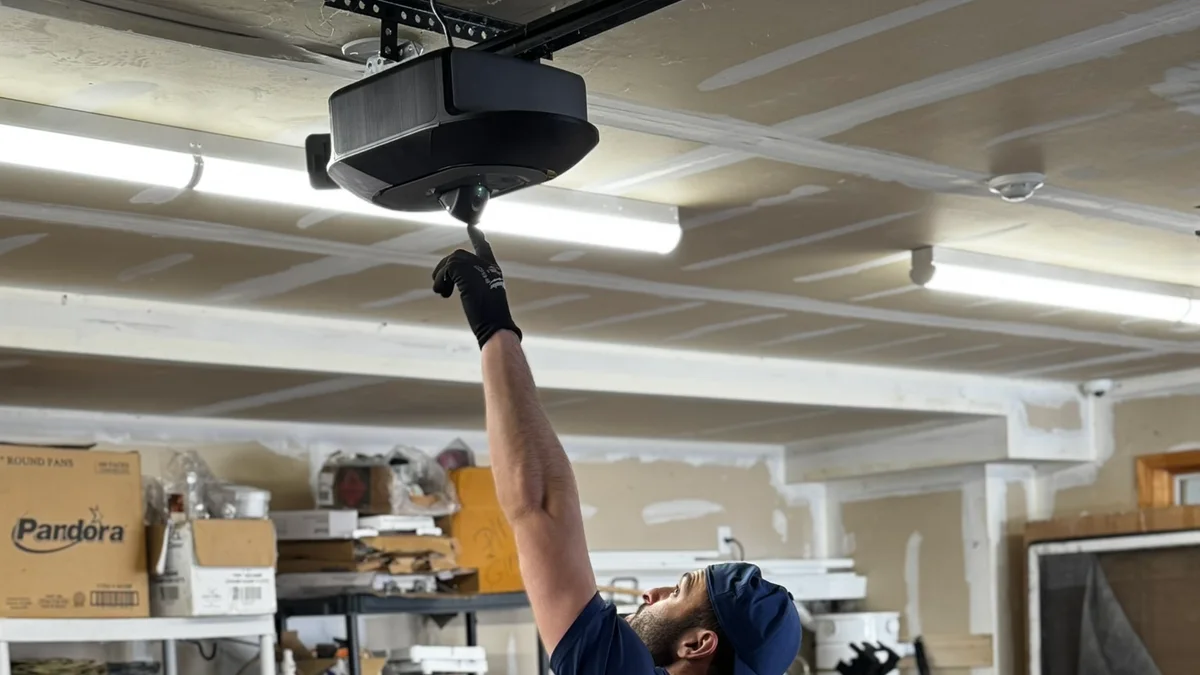
Opener repairs run $150–$350; a new install runs $450–$900. A contractor's decision guide: age thresholds, safety sensors, and when replacing wins.
Your garage door opener quits on a Tuesday morning, and the internet immediately splits into two camps: forum posts insisting a $30 gear kit will fix it, and company websites insisting you need a whole new unit today. Both are sometimes right, which is exactly why the question is worth ten minutes of honest thinking before anyone touches a ladder.
Here's the math that frames everything: typical opener repairs — a stripped gear kit, a fried logic board, misaligned or failed safety sensors — run $150–$350. A quality new opener, professionally installed, runs $450–$900. So the repair-vs-replace question is really: is this fix the last one this opener needs, or the first of several?
We repair openers and we replace openers, so we don't win either way you decide. This is the same decision framework we use standing in your garage.
The Repairs That Are Usually Worth Making
Most opener failures trace to a handful of parts, and on a reasonably young opener these repairs make clear financial sense:
- Stripped drive gear. The classic symptom: the motor hums, the door doesn't move. The nylon main gear wears out and strips, especially on chain drives lifting heavy or unbalanced doors. A gear-and-sprocket kit is a routine repair.
- Failed logic board. The opener behaves erratically, ignores remotes, or dies entirely. Boards fail from power surges and age; replacement is straightforward when the board is still available for your model.
- Safety sensor problems. The door reverses for no reason or won't close at all. Often it's alignment, sun glare, or a damaged wire — among the cheapest fixes in the trade. Failed sensor units are also inexpensive to swap.
- Remotes, wall consoles, and travel limits. Small stuff, quick fixes.
All of these typically land in the $150–$350 range. On an opener under ten years old, repair is almost always the right call. Our opener repair and installation page covers both sides of that visit.
The 10–15 Year Threshold
Garage door openers generally give 10–15 years of reliable service. Past that point, the repair math changes — not because any single fix gets more expensive, but because fixes start arriving in clusters.
The pattern we see constantly: a 13-year-old opener gets a new gear kit, then six months later the logic board goes, then the capacitor. Each repair was individually "worth it," and together they exceeded the cost of a new unit — without delivering any of a new unit's benefits.
Our rule of thumb:
- Under 10 years old: repair, almost always
- 10–15 years old: repair once, with eyes open — if a second significant failure follows, stop putting money in
- Over 15 years old: put the repair money toward a new opener unless the fix is trivial (sensor alignment, remote battery)
There's also a parts-availability issue: manufacturers stop making boards and gear kits for old models, and when the part doesn't exist, the decision makes itself.
When Replacement Isn't Optional: The Safety Sensor Rule
One bright line overrides all the math above. If your opener has no photo-eye safety sensors — the little lenses near the floor on either side of the door — it predates the 1993 federal requirement for automatic reversal systems. That makes it over three decades old and missing the single most important safety feature an opener has.
We don't repair these, and we'd encourage you not to pay anyone who offers to. An opener that can't detect a child, pet, or bumper under a closing door isn't a vintage appliance; it's a hazard with a motor. The same logic applies to openers whose sensors are present but bypassed or wired around — a disturbingly common DIY "fix" we find in the field.
If this describes your opener, skip the rest of this article. The answer is replacement, and the $450–$900 installed cost buys you out of a genuine safety problem.
Other Signs the Opener Is Telling You It's Done
Short of total failure, openers usually announce retirement gradually:
- Repeated failures. You're on your second or third repair in a couple of years. The next part is already wearing out.
- Intermittent operation. Works some days, not others — often a failing board, and intermittent electronics problems are the most expensive kind to chase.
- Straining, slowing, or excessive noise. Sometimes this is the door (balance, springs, rollers), but on an old opener it's often a tired motor. Worth a professional diagnosis either way, because a new opener won't fix a bad door.
- No vertical-stop response or weak force adjustment. Safety systems that can't be brought into adjustment are a replacement trigger, not a repair.
One honest caveat: a surprising number of "opener problems" are actually door problems. An unbalanced door with a worn spring can burn out a healthy opener and mimic every symptom on this list. Any technician who quotes you a new opener without checking door balance first is skipping step one.
What a New Opener Buys You Beyond the Fix
Replacement isn't just resetting the failure clock. Opener technology moved a long way in the last decade, and the features are genuinely useful rather than gimmicks:
- Belt drive + DC motor: dramatically quieter than old chain drives, with soft-start and soft-stop — transformative if there's a bedroom over the garage
- Built-in WiFi and myQ app control: open and close from anywhere, get alerts when the door operates, and check whether you actually closed it from the airport
- Battery backup: the door still works during a power outage — worth having anywhere storms take down lines
- Modern security: rolling-code remotes replace the fixed codes on old units, which could be intercepted and cloned
- Better safety systems: current sensors and force-sensing are simply better than 15-year-old versions
A LiftMaster belt-drive unit with WiFi is our standard recommendation for most homes — details on our LiftMaster opener installation page. Installed with a full door tune-up, you're typically in that $450–$900 window.
The Decision in One Pass
Run your situation through this list, top to bottom, and stop at the first line that applies:
- No safety sensors, or sensors bypassed: replace. Not negotiable.
- Opener over 15 years old with any significant failure: replace.
- 10–15 years old, first major failure, parts available: repair is defensible — but budget mentally for replacement within a few years.
- 10–15 years old, second major failure: replace. You're paying for the new opener in installments either way.
- Under 10 years old: repair. A gear kit, board, or sensor fix at $150–$350 should buy years more service.
- Symptoms include a heavy, unbalanced, or noisy door: diagnose the door first — spring repairs run $175–$350 and may save the opener entirely.
And if a company has already quoted you a full replacement and something about it doesn't sit right, get a second opinion before you spend the money. We offer them for exactly this scenario — sometimes we confirm the quote, and sometimes a $200 repair sends the new-opener money back into your pocket.
Not sure which side of the line your opener falls on? Smart Garage Doors diagnoses honestly and quotes both paths when both make sense — repairs from $150, new installs from $450, with same-day appointments often available across NY, NJ, and CT.
Frequently Asked Questions
Common questions about this topic.
Common repairs — a stripped drive gear kit, a replacement logic board, or safety sensor fixes — typically run $150–$350 including parts and labor. Simple issues like sensor alignment or remote programming land at the bottom of that range.
Need Professional Help?
While these tips are helpful, some garage door issues require professional expertise. Smart Garage Doors offers expert repair services throughout NY, NJ & CT.