Loading Dock Door Repair: A Warehouse Operator's Guide
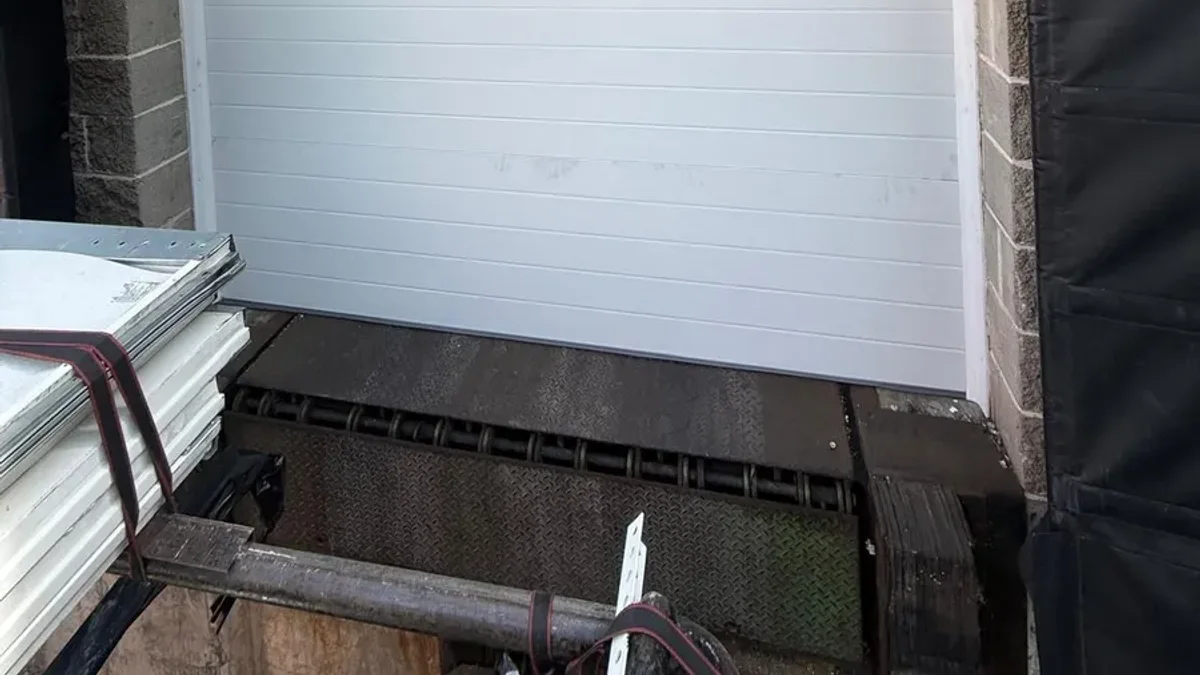
Forklift strikes, track misalignment, operator burnout — the common dock door failures, what to do when a bay goes down mid-shift, and repair vs panel vs full replacement.
A dock door doesn't care about your outbound schedule. It goes down at 6:40am with a trailer on the plate, or at 9pm halfway through a wave, and from that moment every decision either shortens the outage or stretches it.
Most dock door failures come from a short list of causes — forklift contact, cycle fatigue, deferred wear — and most of the outage length is determined not by the repair itself but by what happens in the first thirty minutes: whether the door gets damaged further, and how much information the vendor has before the truck rolls.
This guide covers the failure modes we see most across warehouses in NY, NJ, and CT, the mid-shift playbook when a bay goes down, repair versus panel replacement versus a new door, and why multi-facility operators standardize on one vendor.
The Four Failure Modes That Cause Most Dock Door Outages
Across working warehouses, the overwhelming majority of dock door calls trace back to four causes:
- Forklift and equipment strikes. The number one cause of commercial door damage. A clipped bottom panel, a bent track from a mast strike, a guide rail pushed out of square. Small strikes that "the door still works" after are the dangerous ones — a slightly bent track chews rollers and racks the door a little more every cycle until it jams hard.
- Track misalignment. From impact, building settlement, or anchors loosened by years of vibration. Symptoms: the door hesitates at the same spot every cycle, screeches, or visibly walks to one side. It never improves on its own.
- Worn rollers and hinges. Pure cycle fatigue. Flat-spotted or seized rollers drag in the track, which loads the operator and springs, which accelerates everything else's wear. Cheap parts, expensive consequences when ignored.
- Operator burnout. The motor that dies mid-shift usually spent months lifting a door the springs should have been carrying. Stripped gears, fried boards, and thermal cutouts are the symptom; an unbalanced door is the disease. (The spring math is in our spring cycle ratings guide.)
Notice the pattern: three of the four are progressive. They announce themselves for weeks before they take the bay down.
When a Bay Goes Down Mid-Shift: The First 30 Minutes
What your shift lead does before the technician arrives determines whether this is a part swap or a rebuild.
- Isolate the door. Tag out the operator, cone off the bay, and reroute the trailer to another door. The most expensive dock door failures we see are simple failures that someone tried to power through — running the operator against a jammed or spring-dead door is how a track repair becomes a track, operator, and panel repair.
- Be careful with the manual release. The red-handle disconnect is safe on a balanced door. On a door with a snapped spring or cable, pulling the release can let the full door weight drop. If the door failed with a bang, or it's sitting crooked in the tracks, do not pull the release and do not let anyone lift the door by hand — keep people clear and leave it for the technician.
- Don't "straighten" bent track. Pry-bar field fixes put the door back in service racked, and racked doors fail again fast and unsafe.
- Capture the failure. Photos of the door, the tracks both sides, the operator data plate, and any broken parts on the floor.
How to Call It In So the Fix Happens in One Trip
The difference between a one-trip repair and a diagnose-then-return-with-parts repair is mostly the quality of the first phone call. Have ready:
- Door size — width and height, even paced off approximately
- Door type and brand — sectional or rolling steel, and the manufacturer from the panel sticker or data plate
- Operator brand and model — off the motor's data plate
- What happened — the bang, the lean, the dead motor, the forklift incident nobody saw
- Photos — of all of the above
That package lets a dispatcher load the right springs, rollers, track, or operator parts on the truck instead of discovering what's needed on arrival. You can send all of it through our photo estimate channel and get a preliminary read before dispatch — and for a down bay, our emergency line runs 24/7 with priority dispatch and an exact ETA when you call. No vendor can honestly promise the same arrival minute for every facility on every night; what we promise is the front of the queue and a real number when you're on the phone.
Repair vs. Panel Replacement vs. New Door
When the damage is structural — usually forklift-related — there are three tiers, and the right one is a condition call, not a sales call:
- Repair is right when the damage is localized to hardware: bent track sections, rollers, hinges, cables, springs, struts. The panels and frame are sound, so you replace components and the door goes back to full duty. Most calls land here.
- Panel/section replacement is right when one or two sections are crushed but the rest of the door and the tracks are straight. Sectional doors are built for this — if the model is still in production. A discontinued door can force the full-door decision off one dead panel.
- Full door replacement is right when damage spans multiple sections, the frame or both tracks are compromised, or the door is old enough that you'd be bolting new panels onto fatigued hardware. It's also worth considering when a marginal door guards a critical bay — sometimes the next failure costs more than the door does.
Commercial doors vary too much in size, gauge, insulation, and wind-load spec for honest flat pricing — we quote per door, in writing, before work begins, and when the call is genuinely between two tiers we price both and tell you which we'd pick for our own building.
Why Multi-Facility Operators Standardize on One Vendor
If you run more than one building, every additional door vendor multiplies your overhead: another COI to chase, another rate sheet, another invoice format, another dispatcher who doesn't know your doors.
Standardizing on one vendor buys you:
- Per-door records across every site — sizes, brands, operator models, spring specs, service history — so every call starts warm
- One rate structure agreed once, instead of per-incident pricing leverage that runs against you
- Consistent documentation — the same photo-documented invoice format at every facility
- Pattern visibility — one vendor seeing all your sites can tell you the same bay design keeps eating rollers, or that one facility's forklift fleet drives most of the damage spend
This is how we work with our larger accounts — including a national logistics company whose facilities we service across two states under exactly this model: one contact, one rate agreement, per-door history at every site. The same structure scales down to a two-building operation, and it's the backbone of a preventive maintenance program if you take the next step from break-fix to scheduled care.
The Cheapest Repair Is the One You Scheduled
Run the list against your own dock: doors that hesitate at the same spot, bays with old forklift kisses on the bottom panels, operators that groan on the first lift of the morning. Each is a failure with a date on it — you just don't know the date yet.
A walkthrough survey puts numbers on it: which doors need work now, which are entering their wear window, which are fine. From there you fix on your schedule, at scheduled-work pricing, with the bay down during hours you chose. The full commercial scope is at commercial garage door repair.
A down bay is a throughput problem, not just a door problem. Smart Garage Doors repairs dock and bay doors for warehouses across NY, NJ, and CT — 24/7 priority dispatch for commercial accounts, photo-based preliminary estimates, written per-door quotes before work begins, and multi-facility account structures with one contact and per-door records at every site. Call with the door size and photos and we'll get you a number fast.
Frequently Asked Questions
Common questions about this topic.
Forklift strikes are the single biggest cause — bent tracks, crushed bottom panels, and racked doors from impacts that seemed minor at the time. The rest is mostly progressive wear: track misalignment, flat-spotted or seized rollers, and operators burned out from lifting doors whose springs were no longer carrying the weight. Three of the four announce themselves weeks before the outage.
Need Professional Help?
While these tips are helpful, some garage door issues require professional expertise. Smart Garage Doors offers expert repair services throughout NY, NJ & CT.