Garage Door Won't Open in the Cold? Here's What's Actually Wrong
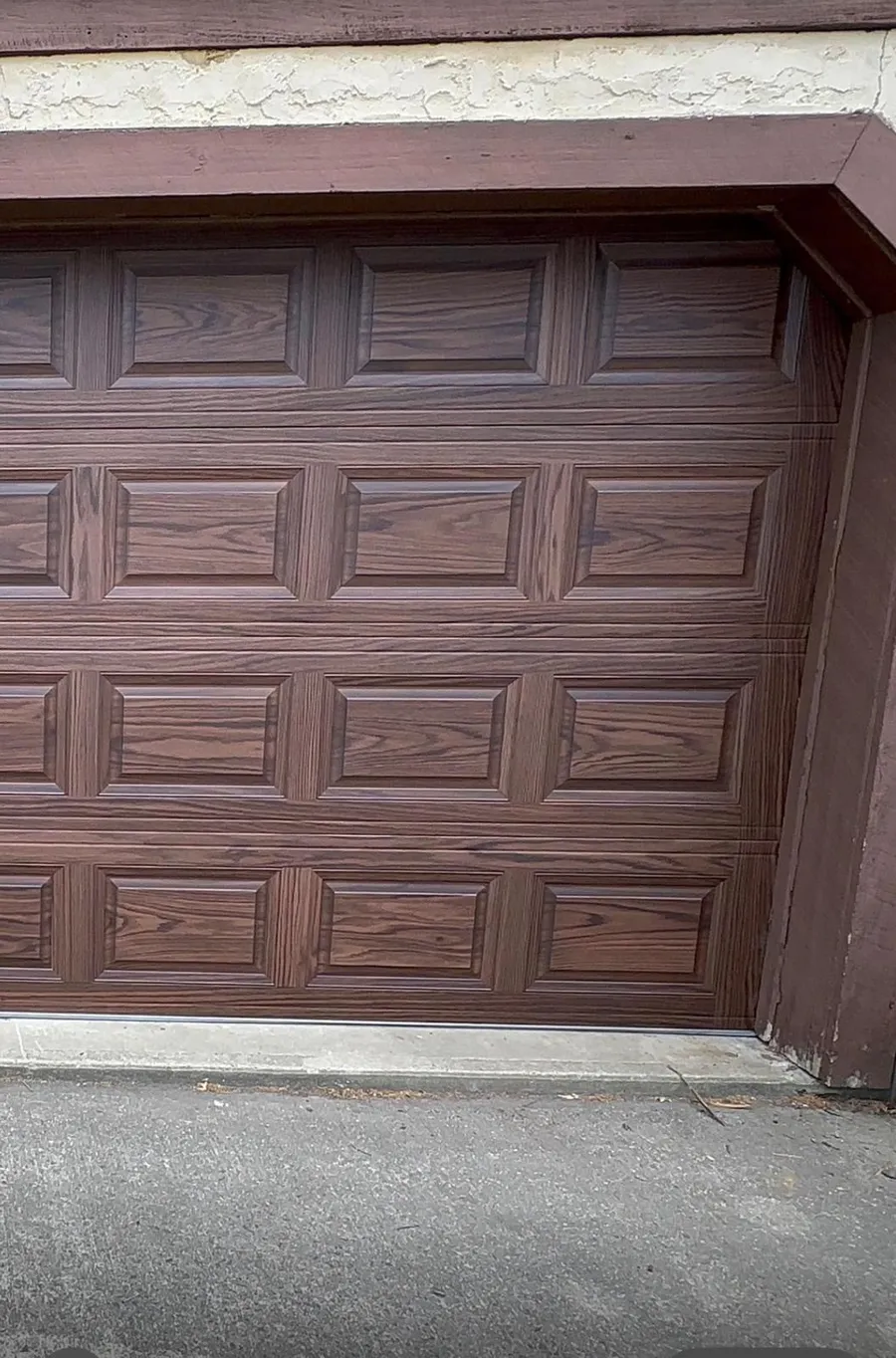
Garage door stuck in the cold? How to tell a frozen seal from stiff springs or a tripped opener force limit — and what to do about each.
First hard freeze of the season, and the door either won't budge, groans halfway up, or the opener strains and reverses itself. It feels like one problem, but it's usually one of three different things — and they call for three different responses. A frozen bottom seal is a five-minute fix. Cold-stiffened springs and tripped opener force limits are not something to force through. Here's how to tell them apart on a winter morning in the NY/NJ/CT tri-state.
First: is it actually frozen to the ground?
This is the most common cold-weather call, and it's the easiest to confirm. If the garage floor got wet — melted snow, a leaky hose, rain that blew in — and then temperatures dropped overnight, the rubber weatherstrip along the bottom of the door can freeze directly to a thin skin of ice on the concrete. The door looks and sounds stuck because it is, literally, glued down.
The tell: the opener motor runs (you hear it), but the door doesn't lift, or it lifts an inch and strains. Pushing the door by hand from outside, you'll feel it's held at the very bottom edge, not jammed partway up the track.
What to do: don't keep hitting the button — repeated attempts can strain the opener's drive gear or the top panel if the door partially separates from the seal unevenly. Instead, use a hair dryer or heat gun along the seal line, or break the ice bond gently with a flat tool (a plastic scraper, not metal, so you don't tear the weatherstrip). Once the ice releases, the door should operate normally. If this keeps happening, see the prevention section below — it's a drainage and seal issue, not a door problem.
Second: the door moves, but it's slow and heavy-feeling
If the door runs the full track but feels sluggish, labored, or the opener sounds like it's working harder than usual — and there's no ice at the bottom — the springs are the likely cause. Torsion and extension springs are steel, and steel contracts slightly in cold temperatures. On top of that, the lubricant on an older spring or on the rollers and hinges thickens in the cold, adding friction exactly where the system can least afford it.
A door that's properly balanced normally lifts with very little resistance — that's the whole point of the spring system. If cold weather is enough to make the opener strain, it's often a sign the springs were already near the end of their service life (most residential torsion springs are rated for 10,000–15,000 cycles) and winter just exposed it. This is not a DIY adjustment: springs are under heavy tension, and touching them without the right tools and training is a real injury risk. If your door feels noticeably heavier in winter or the opener is straining, that's worth a spring balance check before it fails outright — a sudden spring failure in cold weather, with a stiffer, less forgiving system, tends to be harder on the door than a failure in mild weather.
Third: it opens partway, then reverses or stops
Modern openers have a force-limit setting — a safety feature that makes the motor stop and reverse if it senses more resistance than expected, so it doesn't crush something (or someone) in the door's path. Cold weather raises resistance across the whole system at once: stiffer springs, thicker lubricant, a slightly tighter track from material contraction. The opener can read that extra resistance as an obstruction and trip its safety limit, even though nothing is actually in the way.
The tell: the door starts moving, gets partway, then stops or reverses — consistently, at roughly the same point each time. If the safety sensors near the floor are clear and nothing is physically blocking the door, the force limit is the next thing to check. This setting can be adjusted on most openers, but it has to be set correctly — too high defeats the safety feature it exists for. That adjustment, along with confirming the door is actually balanced (so the opener isn't compensating for a mechanical problem by working harder), is a job for a technician who can test it properly rather than a trial-and-error dial turn.
What not to do when a garage door is fighting the cold
A few things make a cold-weather sticking point worse, not better:
- Don't force the door or hold the button down repeatedly against resistance. If something is genuinely frozen or binding, you risk bending a track or burning out the opener's drive motor.
- Don't pour hot water on a frozen seal. It melts the ice fast, but refreezes within minutes and often makes the bond worse. Heat (hair dryer, heat gun) or mechanical separation works better.
- Don't assume it's "just the cold" every time. Cold weather tends to expose an existing problem — a spring near end-of-life, an out-of-balance door, a damaged seal — rather than create one from nothing. A door that sticks every cold snap is a pattern worth checking, not something to wait out each winter.
Preventing it before the next freeze
A few habits cut down on cold-weather door trouble significantly:
- Fix drainage at the threshold. If water pools under the door after rain or snowmelt, regrading the apron slightly or adding a threshold seal keeps that water from freezing against the weatherstrip in the first place.
- Use a garage-door-rated lubricant on springs, hinges, and rollers before winter. Standard household oil and WD-40 aren't formulated for this and can attract grit; a silicone-based garage door lubricant stays flexible in the cold and cuts friction where it matters most.
- Check the weatherstrip condition each fall. Cracked, hardened rubber loses its flexibility and is more prone to tearing when it does freeze to the ground. Replacing a worn seal is inexpensive and routine.
- Consider insulation if the garage is attached or heated. An insulated door holds a more stable internal temperature, which reduces the swings that stress hardware and seals — see our garage door insulation guide for what R-value actually does in this climate.
- Get a pre-winter tune-up. A technician can balance-test the springs, lubricate the right points, and check the opener's force and travel settings before the cold exposes a weak spot — see our maintenance plans.
Garage door fighting the cold? Call (914) 557-6816 for same-day service in most cases, or send a photo for a quick estimate — we'll tell you whether it's the seal, the springs, or the opener before a truck rolls. 24/7 line with an exact ETA when you call, across NY, NJ & CT. Learn more about our opener repair and spring replacement services.
Frequently Asked Questions
Common questions about this topic.
Three common causes: the bottom weatherstrip is frozen to a thin layer of ice on the garage floor, the springs have stiffened with the cold (often a sign they're near end of life), or the opener's safety force-limit is tripping because cold weather has added resistance throughout the system. Each has a different fix, and only the frozen-seal case is safe to handle yourself.
Need Professional Help?
While these tips are helpful, some garage door issues require professional expertise. Smart Garage Doors offers expert repair services throughout NY, NJ & CT.