Garage Door Cable Replacement: Warning Signs, Cost, and Why It Can't Wait
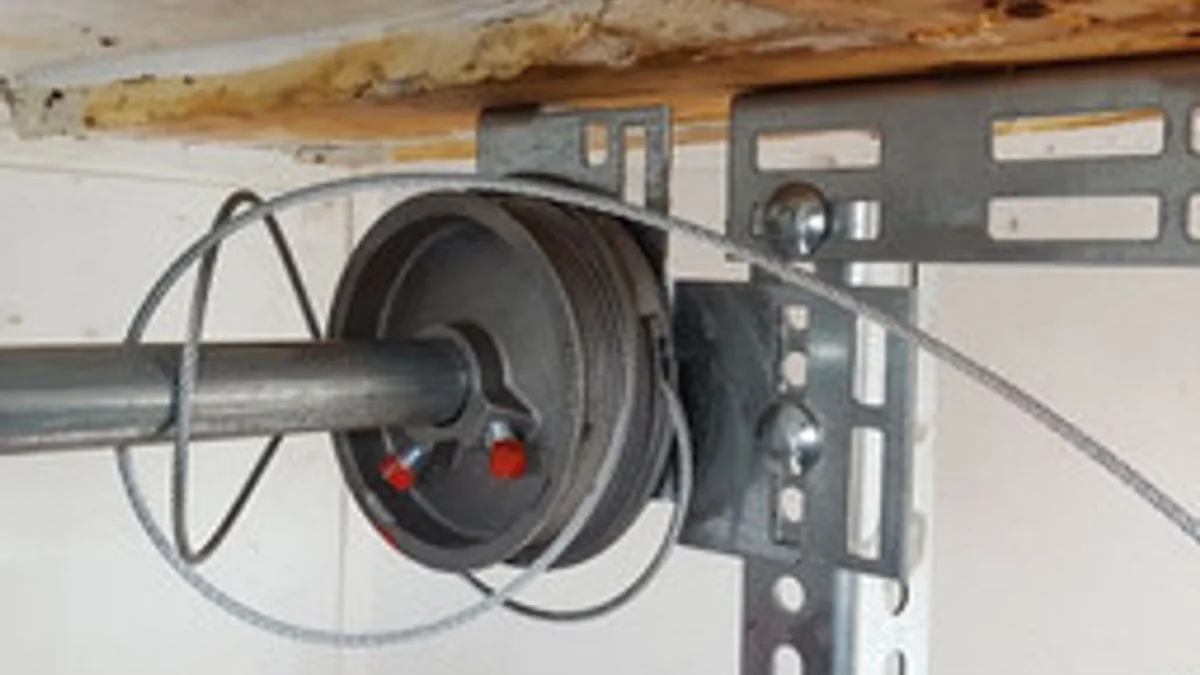
Frayed or snapped garage door cable? The warning signs to catch early, what replacement costs in the NY tri-state, and why a failing cable is the repair you shouldn't postpone.
Garage door cables are the quiet workhorses of the whole system: two braided steel lines that transfer the spring's lifting force to the bottom corners of the door. When they're healthy, you never think about them. When one starts to go, the door tells you — a lean to one side, a grinding descent, a cable that suddenly looks like frayed rope. Here's how to read those signals, what replacement actually costs, and why this is the one repair where waiting gets expensive fast.
What the cables actually do
Your door doesn't lift because the opener is strong — a typical opener contributes about as much force as one adult arm. The real lifting comes from the springs, and the cables are how that force reaches the door. Each cable winds around a drum at the top of the track and anchors to the bottom bracket of the door, so hundreds of pounds of spring tension flow through those two steel lines on every single cycle.
That's why cable condition matters more than almost any other wear item: a cable failure doesn't just stop the door, it releases stored force unevenly — which is how doors end up jammed diagonally in their tracks, and how bent panels and mangled tracks turn a $200 repair into a much bigger one.
The 5 warning signs of a failing cable
1. Fraying — visible broken strands sticking out like whiskers, usually near the bottom bracket where moisture collects. This is the classic early warning, often weeks before failure.
2. The door hangs crooked — one side lower than the other, or a visible gap under one corner when closed. One cable has stretched or slipped; the other is now carrying extra load it wasn't sized for.
3. Rust or corrosion — especially near the bottom, where snow melt and road salt splash. Corroded strands fail without the courtesy of visible fraying first.
4. A cable that's gone slack — a loose, floppy cable while the door is closed means it has jumped its drum groove or stretched badly. The door may still move, but it's working wrong.
5. Grinding, scraping, or a bang — a loud snap from the garage followed by a door that won't lift usually means the cable (or the spring) just let go. At that point, stop using the door entirely.
Catch it at stage 1 or 2 and this is a routine, inexpensive service call. Catch it at stage 5 and you're often paying for panel or track repair too.
What cable replacement costs
In our service area, cable and roller work falls in the same range as most standard garage door repairs: roughly $150 to $300 depending on the door size, drum type, and whether rollers or bottom brackets need attention at the same time. We quote the exact price up front, before any work begins, and cables are almost always a same-visit fix — technicians carry them on the truck.
Two cost notes worth knowing. First, cables are replaced in pairs: if one failed, its twin has the same age and the same corrosion history, and it's now been carrying double load. Replacing only one is a false economy that tends to generate a second service call within months. Second, if a technician quotes cable work, it's smart to have the springs balance-tested during the same visit — cables and springs age together, and a spring at end-of-life is often the reason a cable failed early.
Why this is not a DIY job
Plenty of garage door maintenance is homeowner-friendly — lubricating hinges, tightening track bolts, washing panels. Cable replacement is not on that list, and it's worth being blunt about why: the cables are connected to the spring system, and the spring system stores enough energy to lift a 150-pound door seven feet in the air. Detaching a cable without properly releasing that tension can turn hardware into projectiles.
Professionals do this safely because they clamp the door, unload the springs in a controlled way, and re-tension everything to the door's actual weight afterward. The balance test at the end — door stays put at half-height without drifting — is the proof the whole system is set correctly, and it's the part DIY repairs almost always miss.
How to make cables last longer
Cables are wear items, but their lifespan is very manageable:
- Look at them twice a year. Thirty seconds with a flashlight at the bottom brackets catches fraying and rust long before failure.
- Keep the bottom brackets dry. If snow melt pools where the cable anchors, clear it — standing salt water is the #1 corrosion accelerator we see in NY, NJ, and CT garages.
- Don't ignore a crooked door. Every cycle a lopsided door runs multiplies wear on the good cable and the tracks.
- Get a tune-up when anything sounds different. A maintenance visit that catches a $200 cable problem before it becomes a panel replacement pays for itself several times over.
Cable looking frayed, or door hanging crooked? Call (914) 557-6816 or text us a photo — we'll tell you what it needs and the exact price before a truck rolls. Same-day cable and roller service across NY, NJ & CT. Learn more about our cable & roller repair service.
Frequently Asked Questions
Common questions about this topic.
You can — but you shouldn't. A fraying cable can hold for weeks or fail on the next cycle, and when it fails mid-travel the door can drop crooked, jam, and damage panels and tracks. If you spot fraying, keep door use to a minimum and schedule the repair; if a cable has already snapped, stop using the door entirely.
Need Professional Help?
While these tips are helpful, some garage door issues require professional expertise. Smart Garage Doors offers expert repair services throughout NY, NJ & CT.