Carriage House vs. Modern Steel Garage Doors: Which Should You Buy?
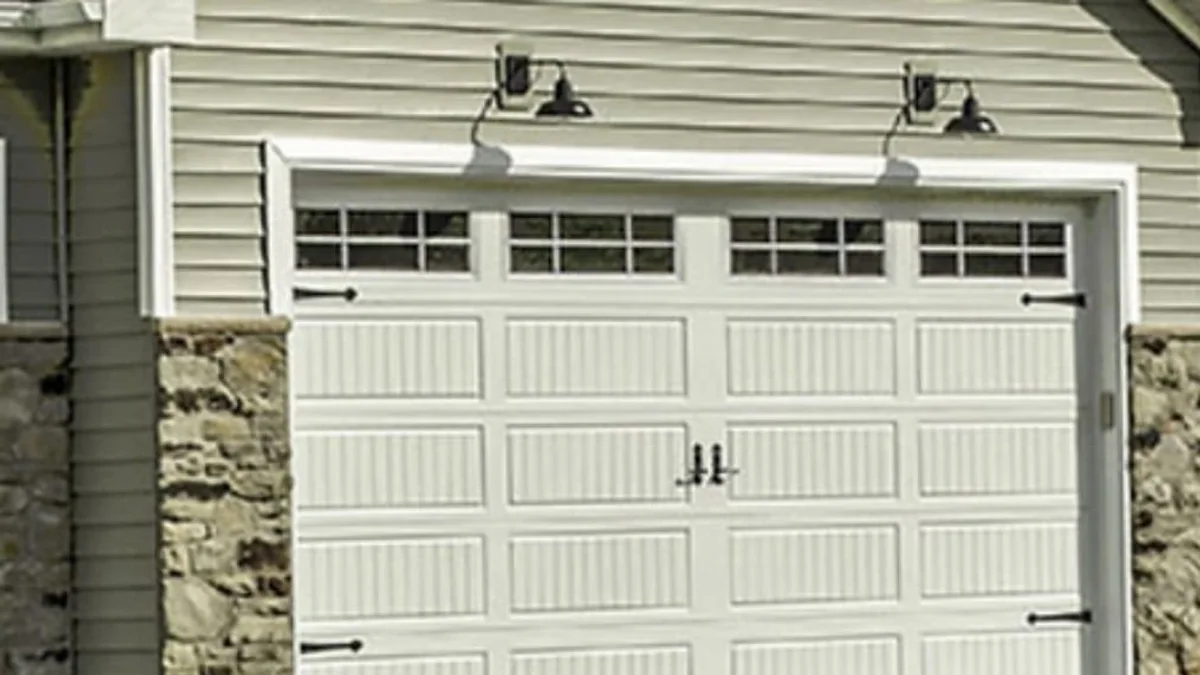
Carriage house doors cost $2,500–$6,500; steel runs $800–$2,800. A contractor's honest take on looks, insulation, maintenance, and which homes suit which.
Walk any established block in the New York suburbs and you'll see the two camps clearly: carriage house doors with their crossbuck overlays and decorative hardware on the colonials and Tudors, and clean modern steel doors on everything built or renovated in the last twenty years. Both are good products. They are not interchangeable, and they are definitely not the same price.
We install both every week across NY, NJ, and CT, so we don't have a horse in this race. What we do have is a clear view of where each door earns its money — and where homeowners overspend on a look their house doesn't need, or cheap out on a door their house deserves.
Here's the honest comparison: cost, aesthetics, insulation, maintenance, and a straightforward answer on which homes suit which door.
The Price Gap Is Real: What Each Door Costs Installed
Let's lead with the numbers, because they frame everything else:
- Standard non-insulated steel: $800–$1,600 installed
- Insulated steel (double or triple layer): $1,200–$2,800 installed
- Carriage house: $2,500–$6,500 installed
So a carriage door costs roughly two to four times a comparable steel door. Where does the money go? Overlay construction (composite or wood boards applied over an insulated steel base), decorative hardware, divided-lite window options, and finishes meant to read as stained wood from the street. The top of the carriage range buys real wood or premium composite overlays with custom detail.
Neither price is wrong. The question is whether your house cashes the check the carriage door writes. On a 1930s colonial in Garden City, it absolutely does. On a flat-front 1980s split-level, much of that $4,000 is decorating a facade that can't use it.
Aesthetics: Architecture Decides, Not Taste
The most common mistake we see is choosing the door from a showroom photo instead of from your own curb. Both styles photograph beautifully. Only one of them will look right on your house.
Carriage house doors are period pieces. They evoke the swing-out doors of pre-automobile carriage barns, which is why they look native on Tudors, colonials, craftsman homes, and farmhouse-style builds — anything with visible trim detail, divided-lite windows, or a steep roofline. The brick colonials of Garden City and the classic homes of Ridgewood, NJ are textbook carriage-door territory.
Modern steel doors — flush panels, long recessed panels, or plank designs — are quieter visually. They complement ranches, split-levels, contemporaries, and new construction, and the better lines now offer woodgrain and dark matte finishes that look genuinely premium rather than builder-grade.
The test we give homeowners: stand across the street and look at your front door, shutters, and rooflines. If there's period detail there, the carriage door joins the conversation. If the house is clean-lined, a busy carriage door will fight it.
Insulation: A Tie, With an Asterisk
Here's something the showrooms underplay: most quality carriage doors are insulated steel doors underneath. The carriage look is an overlay on the same polyurethane-core sandwich construction you'd get in a premium flush steel door. So insulation performance between a good carriage door and a good insulated steel door is essentially a tie — both typically land in the R-9 to R-18 range.
The asterisk: cheap versions of both exist. A single-skin steel door with a stamped carriage pattern is not a carriage door, and it insulates like a cookie sheet. Likewise, the $800 end of the steel range is non-insulated and belongs on detached garages only.
If your garage is attached — especially with a bedroom above it — insist on polyurethane-core construction regardless of which style you choose. The style is a skin; the core is what you live with every winter.
Maintenance: Steel Wins, but the Gap Has Narrowed
Modern steel is the low-maintenance champion: wash it occasionally, lubricate the moving hardware once or twice a year, done. Factory finishes routinely last decades.
Carriage doors depend entirely on what the overlay is made of:
- Composite or faux-wood overlays: nearly maintenance-free, same as steel
- Real wood overlays: refinishing every 2–4 years in the Northeast climate, or they grey, check, and peel
This is the question to ask before you buy a carriage door, not after: what is the overlay material, and what does the manufacturer's finish warranty actually cover? Most of the carriage doors we install today use composite overlays precisely because they deliver the look without signing the owner up for a refinishing schedule.
One more honest note: carriage doors with real wood overlays are heavier, which means springs and openers work harder. Budget for slightly higher lifetime service costs.
Resale and Curb Appeal: Both Pay, One Pays More on the Right House
Garage door replacement consistently ranks among the highest-ROI exterior remodeling projects in industry cost-vs-value studies — that holds for both styles. You're starting from a strong position either way if the existing door is dated or damaged.
The nuance is fit. A carriage door on a period-correct home doesn't just recover its cost in perceived value; it changes how the whole facade reads, the way the right front door does. Buyers walking up to a Tudor with a proper carriage door register "maintained, intentional, premium" before they're through the front door.
On a modern home, the same logic runs in reverse: a sleek insulated steel door in a dark finish reads current and intentional, while a carriage door can read as a mismatch. Spend where the architecture multiplies the money.
The Quick Decision Guide
If you want the answer in thirty seconds:
- Pre-war colonial, Tudor, craftsman, farmhouse: carriage house, composite overlay, $2,500–$6,500 — worth it
- Attached garage on any traditional home, tighter budget: insulated steel with raised or recessed panels, $1,200–$2,800 — the value play
- Modern, contemporary, or recently renovated home: flush or plank-style insulated steel — don't force the carriage look
- Detached garage, no climate concern: standard steel, $800–$1,600 — save the difference
Still not sure which camp your house falls in? Snap a few photos of your garage and the front of the house and send them through our photo estimate — we'll tell you which style fits and quote both so you can see the real delta. And when you're ready, our garage door installation page covers exactly what a turnkey replacement includes.
Whichever side of this comparison your house lands on, Smart Garage Doors installs both — and we'll tell you honestly if the cheaper option is the right one. Send photos for a fast estimate or call to talk through your project; same-day appointments are often available.
Frequently Asked Questions
Common questions about this topic.
You're paying for overlay construction — composite or wood boards applied over an insulated steel base — plus decorative hardware, window options, and premium finishes. That detail work pushes carriage doors to $2,500–$6,500 installed versus $1,200–$2,800 for a comparable insulated steel door.
Need Professional Help?
While these tips are helpful, some garage door issues require professional expertise. Smart Garage Doors offers expert repair services throughout NY, NJ & CT.